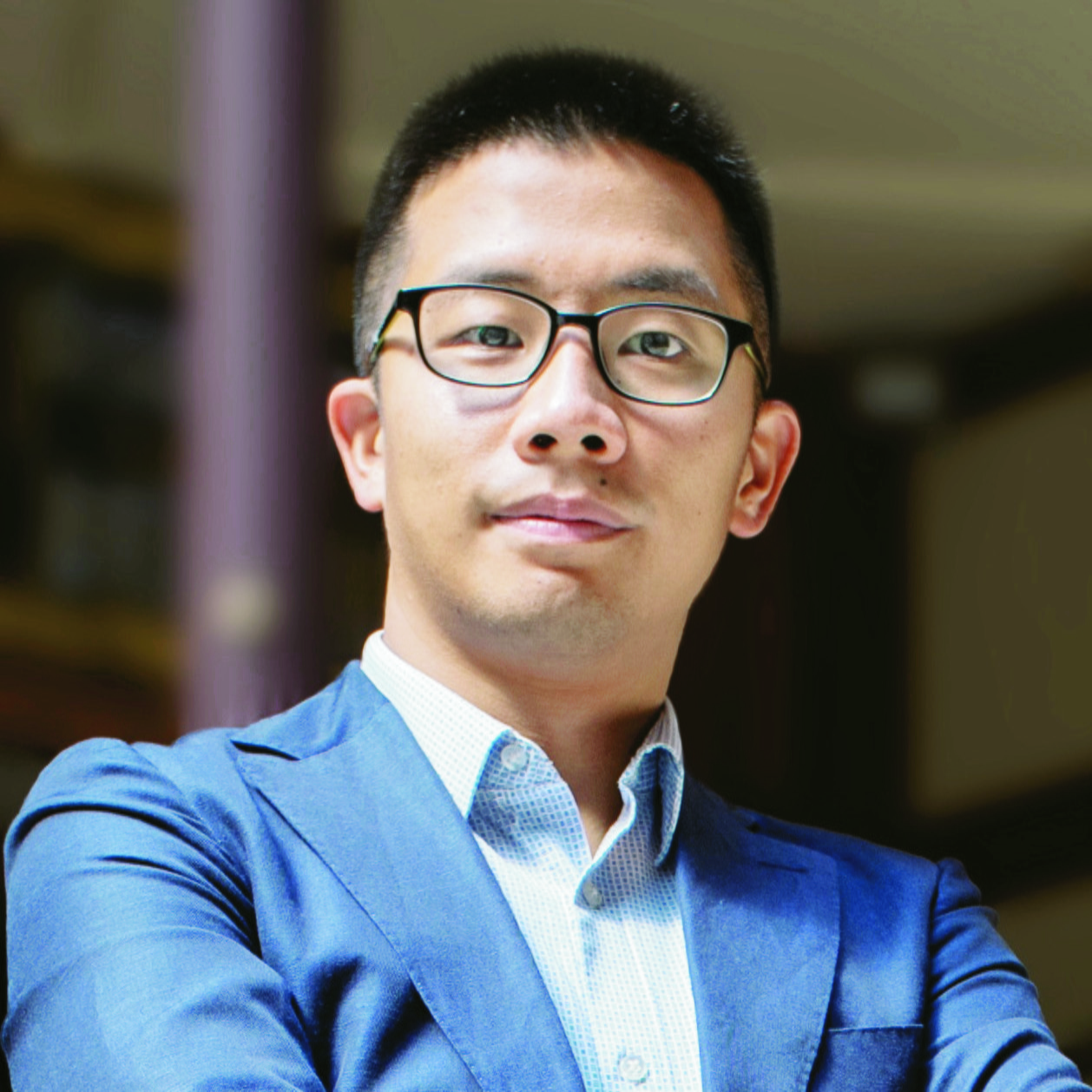
PHOTO COURTESY OF MATTHEW AHN
Matthew Ahn, a candidate for Cuyahoga County Prosecutor, prepares for the March 2024 Primary Election.
by Bruce Checefsky
(Plain Press January 2024) Matthew Ahn grew up and went to public schools in North Royalton, then graduated Cum laude from Case Western Reserve University (CWRU) with a BS in chemistry and a BA in music theory. He was a five-time Dean’s High Honors student and won a Kennedy Prize in Music in 2008, the Lyman Piano Prize in 2006 and 2008, and the W.R. Veazey Chemistry Prize in 2007. He received an MA in music composition from the University of Minnesota and a Juris Doctor (JD) degree from the New York University (NYU) School of Law.
He was thirteen years old when he started undergraduate school at CWRU, so young that his parents had to move their home to Cleveland Heights, near the university because he could not drive or live in the dorm. The experience was a difficult transition at first. Four years later, he graduated with a dual degree.
Growing up in North Royalton was a comfortable childhood, he said, with subtle anti-Asian racism around him, which he realized when looking back at his youth.
“Back then, North Royalton was very conservative,” said Ahn. “I was noticing things were unfair, and it was difficult for me to be heard. It contributed to my desire to speak up whenever the opportunity arose.
Ahn planned to attend medical school, but his passions led him elsewhere. He was interested in music and later turned his attention to law school. Following his law degree from NYU, he worked as a law clerk at the Northern District of New York, and a year later, he was a Sinsheimer Children’s Rights Fellow for Mobilization for Justice (formerly Partnership for Children’s Rights), where he represented special education students in obtaining individualized education and support from the New York City Department of Education through negotiations and Individuals with Disabilities Education Act (IDEA) administrative proceedings.
He worked as a law clerk for the United States Court of Appeals for the Third Circuit in Philadelphia before returning to Ohio as a research and writing attorney for the Federal Public Defender, Northern District of Ohio.
Ahn is running against two-term incumbent Michael O’Malley in the March 19 Democratic primary for Cuyahoga County prosecutor. His campaign includes opposing a new county jail as large as the one proposed in Garfield Heights, which could cost an estimated $750 million. He also wants changes to the juvenile court’s binding proceedings.
Bind over is a process where a juvenile court judge transfers a case to an adult court to be tried and sentenced as an adult. In Ohio, youth ages 14 and up can be transferred to the adult court system. The bind over process can be either mandatory or discretionary.
“Over the last five years, Cuyahoga County has tried nearly as many children as adults as the rest of Ohio combined,” said Ahn. “Ninety-two percent (92%) of those children are black.”
Research shows that children sent to adult prison are more likely to commit more crimes when they are released, not less, according to him, a practice that makes citizens generally less safe. He plans to do something about it if elected.
“We should pause on the juvenile court bind over until we find a fairer process with fewer racial disparities that do not throw a child’s life away. We need more questions or protections before the prosecutor’s office even considers asking to try a child as an adult,” Ahn said.
According to state law in Ohio, eligibility for discretionary or mandatory bind over depends on the crime. The prosecutor’s office sets the charges, and crimes that involve guns are typically subject to a mandatory bind over.
However, Ahn believes there should be more discretion in those other cases. He would like to see the juvenile unit change.
“Most lawyers in the juvenile unit have less than one year of experience in the prosecutor’s office. These are largely folks trying to get out of the juvenile unit and into the general county unit,” he said, “and the incentives are set up not for what the children need but for more convictions and trial wins.”
Personnel and office management issues plague the prosecutor’s office, he added. O’Malley has little interest in debating the issue, which leads to a lack of transparency. Very little data or information comes out of the office.
“The prosecutor simply does not want to provide any information or data,” said Ahn. “There are all sorts of data that would be useful to determine how the prosecutor’s office is doing right now. We have no data on sentencing and racial disparity or charging with racial disparity, which cases get taken to trial, who is currently in jail waiting trail, or anything of that nature.”
Ahn would like to know more about the demographics, who works for the prosecutor’s office, and whether the office practices employ diversity and tracks the successes and failures. The lack of permanent attorneys in the unit undermines its ability to work efficiently and effectively.
“We need lawyers with expertise in juvenile crime who understand the science,” he said. “If you charge a fifteen-year-old with something that happened ten or eleven months earlier, they have a tough time connecting accountability to what they did. These types of considerations need to override how the juvenile unit operates.”
Early intervention can prevent further crimes. Juvenile crime has spiked over the last three years. Ahn said the juvenile court does not provide rehabilitation or crime prevention. Preventing one crime now could prevent five or ten crimes later.
“We want to make sure people get treated respectfully and fairly,” he said.
If elected Cuyahoga County Prosecutor, Ahn would make several policy changes in the first few weeks in office, including no longer seeking the death penalty, placing a pause on discretionary bind overs, and doing away with cash bail.
As the site for the county jail, Garfield Heights presents transportation challenges in getting inmates from jail to court and back again. The County will hire more staff and purchased 100 new vehicles, adding to the overall cost. With the cost of debt servicing, the new jail could cost over $2 billion.
“It does not make sense for us to separate the courts from the jails,” said Ahn. “The downtown site makes the most sense, especially for visitors.”
Editor’s Note: Look for an interview of candidate Matthew Ahn’s opponent in the prosecutor’s race, incumbent Michael O’Malley, in the February issue of the Plain Press.
 Plain Press
Leave a comment