
PHOTO BY CHUCK HOVEN
Saturday, July 27, 2024; Soil Shop Comes to Cleveland, Kentucky Gardens, W. 38th and Franklin: Yulissa Aguilar, an Environmental Justice staff member of the Chicago Office of the United State Environmental Protection Agency (EPA), performs soil screening for lead of soil brought in by residents from their yards or gardens. Kentucky Gardens joined with Cleveland Lead Advocates for Safe Housing (CLASH) and the Soil Shop program of the United States EPA to offer this service to residents.

PHOTO BY CHUCK HOVEN
Saturday, July 27, 2024; Soil Shop Comes to Cleveland, Kentucky Gardens, W. 38th and Franklin: (L-R) United State Environmental Protection Agency (EPA) staff members Naomi Morgan, Saphique Thomas and Shannon Walsh. While residents visited the Soil Shop to have their soil screened for lead, staff of the Region 5 Chicago office of the United States EPA shared information and literature on some of the work their agency does to curb the use of pesticides, to identify native species and invasive species of insects, to promote environmental justice, and to help residents prevent lead paint poisoning.
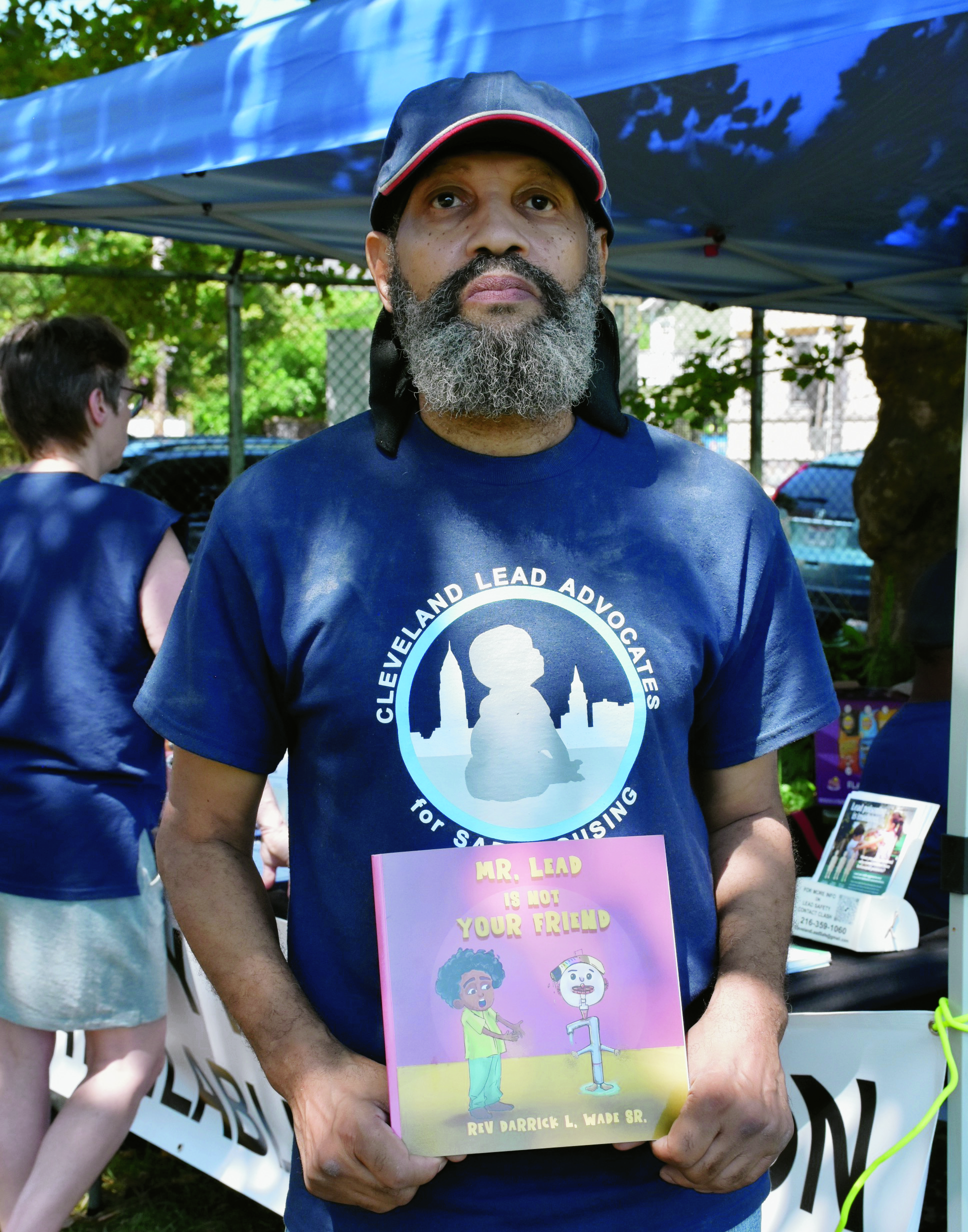
PHOTO BY CHUCK HOVEN
Saturday, July 27, 2024; Soil Shop Comes to Cleveland, Kentucky Gardens, W. 38th and Franklin: Rev. Darrick L. Wade Sr. holds up a copy of his book, “Mr. Lead is not your friend.” Wade is a member of Cleveland Lead Advocates for Safe Housing and wrote the book to warn parents and children of the dangers of lead poisoning.
(Plain Press September 2024) Members of Kentucky Gardens and Cleveland Lead Advocates for Safe Housing (CLASH) co-sponsored bringing a United States Environmental Protection Agency (EPA) Soil Screening, Health, Outreach and Partnership (soilSHOP) event to Kentucky Gardens on July 27th. SoilSHOP is a federal program which provides free screening of soil gathered from gardens or outdoor play areas to identify lead hazards. The program is run by the United States Environmental Protection Agency and members of the EPA Region 5 Chicago Office came to Cleveland for the event.
At the event held at Kentucky Gardens at W. 38th and Franklin, Near West Side residents were given the opportunity to bring soil samples from their gardens or child play areas to have the samples screened for lead content. The screening itself took about five minutes.
Prior to the SoilSHOP event, CLASH provided a link to SoilSHOP information on its website on how to prepare soil samples for the screening, residents were asked to follow the following steps:
“Step 1: Identify an area of interest (garden, play area, nearby vacant lots) for your soil sample. Step 2: Collect Soil – For a large area, collect soil from 5-10 random spots in that area and combine in a clean container. For a small area, collect soil from 3 random spots. For a garden site, collect soil from the surface down to 6-8 inches deep. For a play area, Collect soil from the surface down to 1-2 inches deep. Step 3: Mix soil well in clean container. Step 4: Remove pebbles, rocks, and roots, and let the sample dry in the air. Do not use a flame, oven or hairdryer to dry the soil! Step 5: Transfer 1 – 2 cups of the mixed soil into a clean one-quart Ziplock bag. Label each bag with the source of the soil: location and type of area.
Following the testing, EPA staff provided residents with advice on how to improve garden or play area safety. CLASH also had a table at the event where they distributed free copies of lead safety information.
CLASH member Rev. Darrick L. Wade Sr. also brought copies of his book, “Mr. Lead is not your friend.” The book is dedicated to Darrick’s son, Demetrius Lamar Wade, who died of complications of lead poisoning in September of 2007 at the age of 24. Rev. Wade says the book is for both parents and children to help them recognize the dangers of exposure to lead and to recognize some of the symptoms of lead poisoning. In addition to being a children’s picture book, the book offers a checklist for parents to protect their home and child from lead poisoning.
In addition to providing soil screening, the United States EPA staff also provided literature on other EPA programs. Information included how to limit pesticide use to avoid runoff that is harmful to waterways, information on native species of insects including a booklet on native moths, and information on EPA’s environmental justice programs. The staff also provided a leaflet describing the invasive spotted lanternfly, which presents a hazard to a few commercial and garden crops. The flier asked gardeners to kill the spotted lanternfly and report a sighting to the EPA.
 Plain Press
Leave a comment