PHOTO BY BRUCE CHECEFSKY
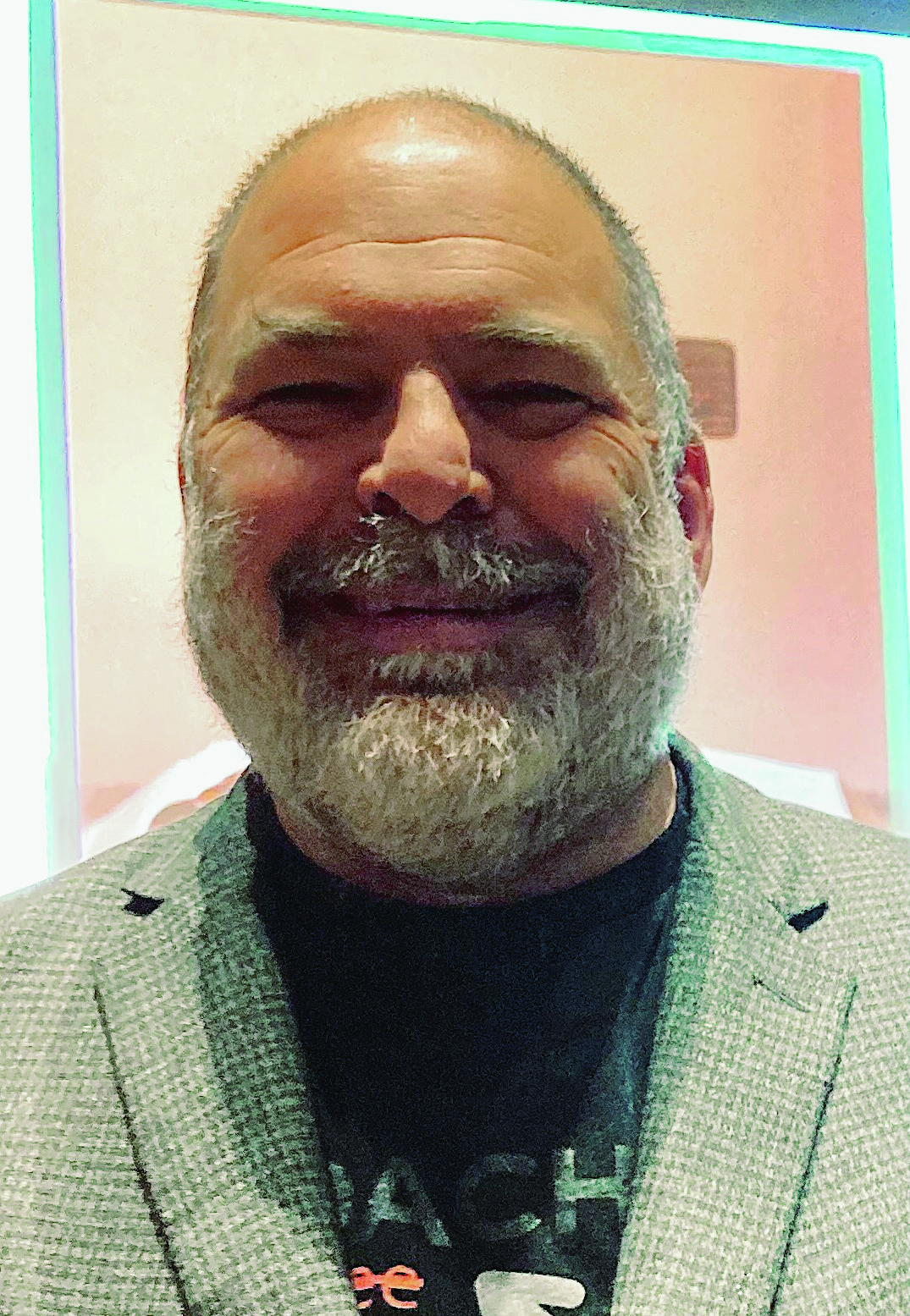
Tuesday, March 3, 2026; Hummer Theatre in the Breen Center for Performing Arts at St. Ignatius High School, 2008 W. 30th Street: Dr. Brian Lovins, President of Justice System Partners, talks about how criminal and juvenile justice systems can be come more equitable, effective and humane.
by Bruce Checefsky
(Plain Press April 2026) Tony Dipre, director of the Office for Human Life at the Catholic Diocese of Cleveland, sat near the entrance to the Hummer Theatre at Saint Ignatius High School, directing people into the auditorium.
Dr. Brian Lovins, president of Justice System Partners, a nonprofit organization that helps the criminal and juvenile justice systems, was about to speak. Saint Ignatius High School and the Cleveland Catholic Diocese Office of Social Action and Office of Prison Ministry hosted his lecture.
“Tonight’s event is part of a discussion, a community event around criminal justice reform as it pertains to parole,” said Dipre. “My office, under the diocese, covers all life and human dignity issues from conception to natural death. People think of the church as the conception, beginning, and end of life, but life, death, and dignity involve everything in between. This is part of our Catholic social teaching at St. Ignatius.”
Lovins, who earned his PhD in criminology from the University of Cincinnati, was standing in the back of the room waiting for people to be seated when he spoke to the Plain Press.
“I do a lot of work with the criminal and juvenile justice systems to improve the effectiveness of the system,” he said. “The role of the justice system, for me, is to help those who are struggling in their lives to get back on their feet and find successful paths to work to repair the harms they’ve done to the community and do great things in their lives.”
Lovins explained during his slide presentation that balancing justice with mercy leads to better outcomes than harsh treatment. With 93 to 95% of cases resolved through plea bargaining, communities often think they want long and hard sentences to deter crime, but his research has shown that it leads to worse outcomes.
“There is a bind-over system where 15-year-olds and younger get tried as adults and spend their life in prison,” he said. Lovins, past president of the American Probation and Parole Association, continued, “The Supreme Court recently cut down the death penalty and life without parole for kids under 18 years old tried as adults.”
Justice System Partners, funded by federal and state grants and private foundations, is not part of an advocacy group, he said. They work to inform and share their research with judges, prosecutors, defense attorneys, and probation departments.
Lovins said that 74% of Americans believe the criminal justice system is not effective in reducing crime. Less than 37% of violent crimes get resolved, with the number even less for rape and robbery, and 9 of 10 property offenses go unsolved. For those convicted and sentenced to jail, probation, or prison, between 40 and 60% return within 3 years. Within 5 years, 70% of people released from prison get arrested again, according to his research.
“Not everyone who commits a crime gets caught, charged, or adjudicated. It shrinks the engagement for victims to affect the outcome,” said Lovins, explaining that the primary goal for judges, prosecutors, and attorneys is to make sure justice is served. “But what about rehabilitation for the criminals and providing spaces where people get better, not worse?”
The prison population has increased 800% since 1981, with the social costs of prison amounting to more than $1 trillion a year. While the Ohio prison population decreased by 11.1% over the past decade, it remains above the designed capacity, which is estimated to be around 37,000 to 38,500, meaning prisons are operating at over 120% capacity, according to the Ohio Legislative Service Commission, a nonpartisan agency providing the Ohio General Assembly with drafting, research, budget and fiscal analysis, training, and other services.
“In a country that believes in second chances and restoration, we created a system that locks people in and blocks them from legitimate pathways back to success,” said Lovins. “We have people in our system that truly want to do better, but our systems do not allow them to succeed. They cannot vote in some states or apply for a driver’s license.”
Thriving people are less likely to commit crimes, and those with better opportunities do not. Rather than creating collateral consequences for those who commit crimes, courts should consider the consequences of sentencing. Strengthening social bonds and connecting with legitimate families through churches, schools, and mentorship programs increases the likelihood of success, he told the audience. Morals and values are a deterrent more than the severity of the sentence.
“Our system of justice is based on a belief that if we just ratchet up the consequences, we have this incredible ability to stop people from engaging in a crime,” he said. “The reason we rely on the system is that we cannot catch people easily enough, and without the consistency of catching them, we are going to increase the severity of the penalty.”
Judges believe that sentencing people to prison restores the community and that criminals have a better path to success. But his research contradicts the findings: the impartiality of judges is not always restorative. They act as referees when mentorship or coaching is required.
“However, when we issue justice or respond to crime, the people who take that person from the courtroom to the next phase of their lives need to be connected and engaged, heavily invested in the outcome,” said Lovins. “Our system is not for self-correct. The paid employees of this country, charged with the health and care of people to help them find better paths forward, can shift the narrative about our criminal justice system.”
“What about the victim?” asked a member of the audience during the question-and-answer period. “The system we have, our structure—we cannot re-victimize them.”
Lovins responded that victims of crime, given a choice between punishment or treatment, would rather see the criminals get treatment 78% of the time. “People we know mostly commit crimes. We hurt the people closest to us, and victims do not always want vengeance. They want people to change.”
An older man seated in the back commented, “You focus heavily on the criminals and neglect to mention the individuals tasked with this work. You cannot invest in those people when they are high and out of touch with reality. The people you are asking to do this work are burning out at a record rate,” he continued. “You have no clue what it is like to be down there, on the ground, as a law enforcement or correctional officer. I did both and survived.”
Lovins walked to the edge of the stage. “I was a probation officer and social worker with a caseload of 150 people. I worked on the ground. I ran an organization and residential programs. Our staff retention rate went up 47% when implementing this program.”
“I hear you,” he said.
 Plain Press
Leave a comment