PHOTO BY BRUCE CHECEFSKY
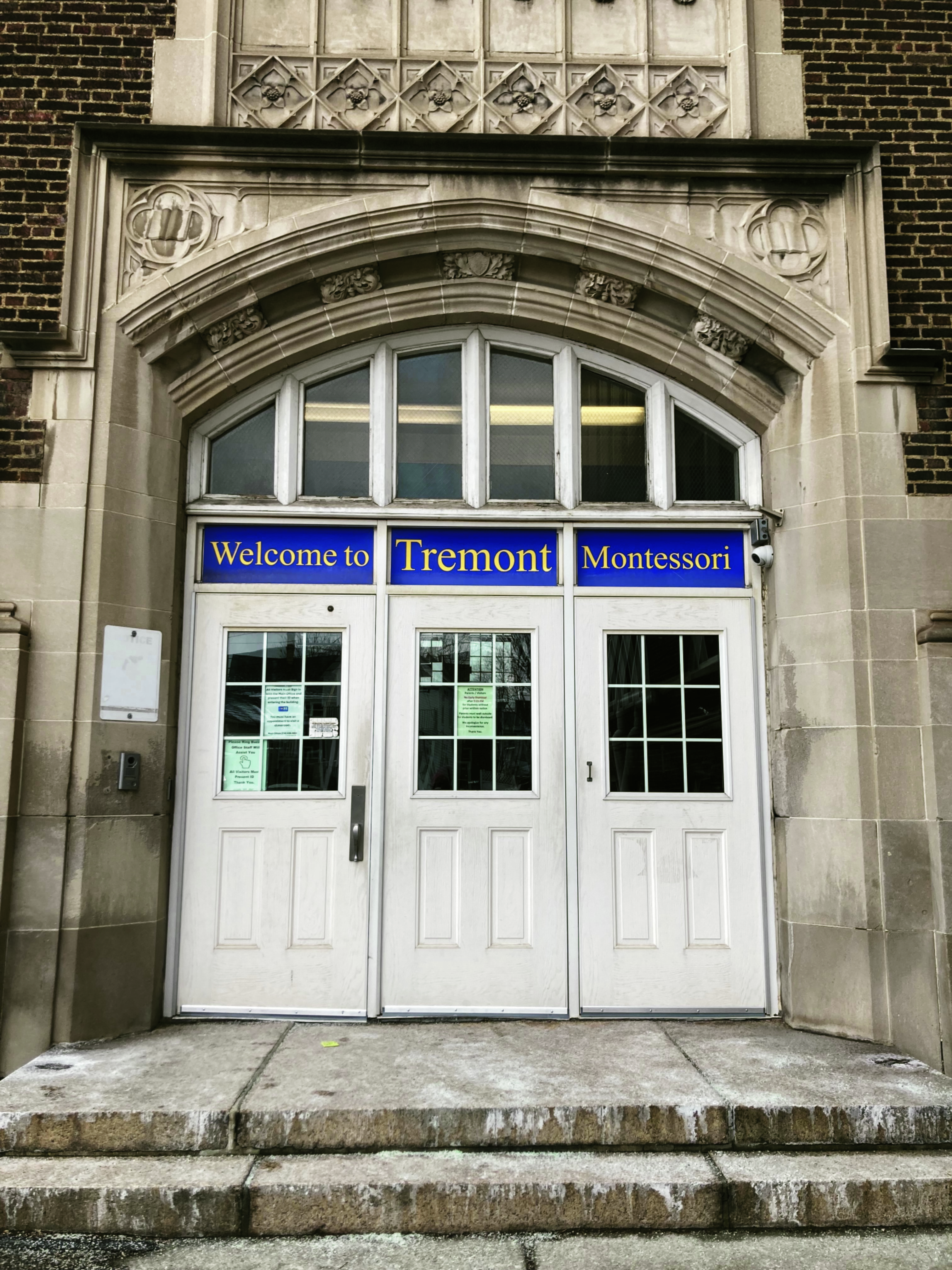
Friday, December 12, 2025; Tremont Montessori School building, 2409 W. 10th Street: The Tremont School building is one of the school buildings that the Cleveland Metropolitan School District has decided to close as part of its Building Brighter Futures plan. The Montessori school in the building now will move to be housed at the Waverly School building at 1805 W. 57th Street. The Tremont Montessori School will be renamed Waverly Montessori School.
by Bruce Checefsky
(Plain Press January 2026) The Cleveland Metropolitan School District (CMSD) unanimously approved a plan in December to close 23 buildings and operate 29 fewer schools next academic year to cut a looming $150 million deficit. CEO Warren Morgan says the consolidation is the best way to provide a better education for all students with more academic and extracurricular options.
Sara Elaqad, the CMSD school board chair, said in a press conference following the decision that they approved the plan and would implement it next.
“The difficulty is part of the plan. We have a responsibility to the students. We have to charge ahead as reasonable adults in a sobering situation about the reality of our city population and what we have or have not delivered to our students.”
The board chair asked CEO Morgan to present a plan to minimize discomfort and challenges. “We understand the challenges,” she said, “and we’re looking to meet families every step of the way.
Programmatic and staffing changes could save $36 million a year. Enrollment numbers will determine teacher layoffs; the administration could expect a reduction in staff.
“The number one thing that needs to happen is that families have to make choices [where to send their children]. Come January, the portal will be open until February 27; that will help us determine our staffing,” said Morgan.
CMSD enrollment declined by 51% or more from 2004 to 2024, even as the city’s overall population declined by 24%, while specific areas like Ohio City, Tremont, and downtown have seen an influx of residents and new housing construction.
The expansion of charter schools can also cause a decline in enrollment. Cleveland has more than 50 public charter schools serving over 15,000 students, playing an important role alongside traditional public schools. Charter schools receive public funds on a per-student basis, so when a student leaves a traditional public school, some of that school’s funding follows the student, siphoning resources and creating budget shortfalls. As charter schools grew, CMSD lost thousands of students and millions in funding.
To further complicate state funding issues, Gov. DeWine’s policy changes involve increased state and federal investment to expand and improve charter schools as a core part of Ohio’s public education landscape. Ohio will receive nearly $105 million over five years to open new charter schools and expand existing ones deemed high-quality by state officials. It’s part of the $500 million the Trump administration will allocate to charter school grant programs this fiscal year. U.S. Education Secretary Linda McMahon made the announcement at the Center for Christian Virtue’s offices during a press conference with Gov. DeWine and U.S. Sen. Bernie Moreno (R-OH).
“Secretary McMahon’s dedication to empowering parents over bureaucrats to make the best educational choices for their children inspires hope for Ohio families. Her commitment to practical, community-rooted education shines brightly in the heartland, and I’m grateful she joined me in Ohio,” said Moreno during the press conference in September.
Ohio Senate lawmakers closed tax loopholes to offset the cost of a $1.68 billion tax cut that primarily benefits the highest-paid 20% of Ohioans. According to Policy Matters Ohio, prioritizing tax cuts over school funding directly reduces the resources available to meet community educational needs. In 2027, the income tax cut will eliminate about $1.1 billion annually. This reduction limits the state’s capacity to meet constitutional obligations to fund public education. Under the Ohio Senate budget plan, 73% of Ohio’s school districts would receive less than the amounts recommended by the Fair School Funding Plan for adequate education.
The Ohio legislature has passed bills focusing on property tax relief and reform. These actions, such as abolishing or heavily cutting property taxes, could significantly reduce public school funding, as schools rely on property tax revenue. Expanded voucher programs could also divert more funds to private schools. These bills are now awaiting the governor’s signature, and their implementation could further shift funding away from traditional public schools.
As part of CMSD’s plan, Tremont Montessori, Cleveland’s sole public Montessori school (PreK-8), will move to Waverly Montessori next fiscal year. Tremont Montessori was the first public elementary Montessori school in Ohio to earn national accreditation from the American Montessori Society. Current students will continue to receive district-wide transportation to the Waverly building at 1805 E 57th Street.
Several Tremont residents spoke out against the plan on social media, calling it an awful idea and saying extensive repairs were the cause for the move. Someone described the building as a pizza oven.
In 2019, the CMSD board considered building a new Tremont Montessori school, but the plan failed to gain enough support. The decision last month will effectively close the building, leaving residents wondering what might happen next.
Because the school district owns and manages the school property, the Ohio Revised Code requires several steps before a public sale. The school district must offer it as a rental property to any interested charter or private school. The district must consider plans for the property that could benefit the community, such as a park, playground, or recreational space, before selling it. Eventually, someone could renovate the building or tear it down to make way for commercial real estate, given the condition.
Executive Director of Tremont West Development Corporation (TWDC), Julie Dahlhausen, said that TWDC is not advocating for a specific outcome relative to the property, but she is working with newly elected Ward 7 Councilperson Austin Davis to hold a public forum sometime early next year to discuss the community’s needs.
“We have a soft plan for February or March to convene a community-wide conversation,” she said. “Our focus is on the immediate needs of the community.”
Dahlhausen said she expects CSMD to provide early notification and clear guidelines for public input, with TWDC and Councilperson Davis to provide community engagement. She said that none of the real estate developers had approached her about the massive property. An acre of land in Tremont is rare, and with property prices skyrocketing in the neighborhood, the 3-acre site could be worth millions.
Tremont lacks a viable grocery store, among other amenities. A recent surge in car break-ins has kept residents wondering about safety.
“The things that make a neighborhood great to live, work, and do business in certainly include things like a grocery store, and I would expect that to be an option to discuss,” she added.


Leave a Reply