SCREEN SHOT
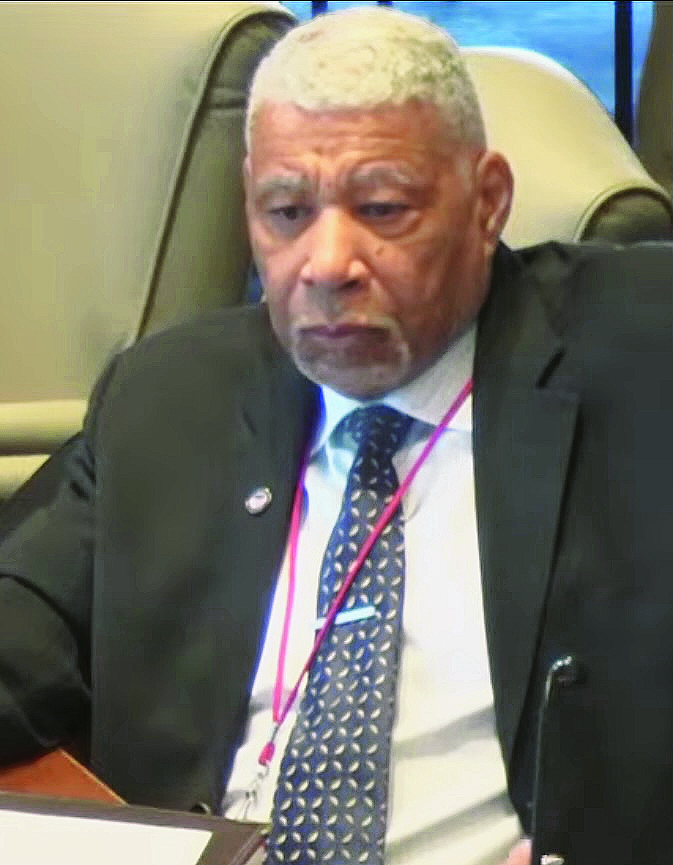
May 13, 2026; Cleveland City Council Safety Committee, Cleveland City Hall, E. 6th and Lakeside Avenue: Charles See, a member of the Consent Decree Monitoring Team, prepares to testify about increasing engagement and building trust with the community.
by Chuck Hoven
(Plain Press June 2026) On February 19th, 2026, Cleveland Mayor Justin Bibb’s Administration joined with U.S. President Donald Trump Administration’s Department of Justice (DOJ) to file a motion to end the Consent Decree that the Cleveland Division of Police has been under ever since 2015 during U.S. President Barrack Obama’s Administration’s Department of Justice.
On May 8th, United States District Court Judge Solomon Oliver, who oversees the case, denied the request and said the City of Cleveland has a ways to go to meet the goals outlined in the agreement formed to achieve compliance with the Consent Decree.
On May 13, testimony by the Consent Decree Monitoring Team before Cleveland City Council’s Safety Committee demonstrated the significant amount of reform still needed for the City of Cleveland Division of Police to be in substantial and effective compliance with the Consent Decree agreed to by the City of Cleveland and the United States Department of Justice in 2015.
According to the City of Cleveland’s website, the Consent Decree resulted after a 21-month investigation determined there was reasonable cause to believe the Cleveland Division of Police (CDP) engaged in excessive use of force. The statement on the website says, “the Department of Justice concluded that the alleged pattern and practice of excessive force was related to structural and operational issues within the Division and potentially violated the United States Constitution and federal law.”
During the 21-month investigation by the Barack Obama Administration’s Department of Justice, many Cleveland residents testified to the pattern and practice of use of excessive force by Cleveland police officers. The testimony included residents concerned about 137 shots Cleveland police officers fired at Timothy Russell and Malissa Williams on November 29th, 2012, that resulted in the death of the two homeless Clevelanders. Sixty Cleveland Police officers were involved in that 23-mile chase that started when police mistook the backfiring of the car driven by Russell for gunshots.
Also occurring while the Justice Department investigation was underway, Tanisha Anderson died in police custody after being treated roughly by police responding to a call for a mental health crisis.
While the City of Cleveland in filing to end the Consent Decree says it has addressed these major issues concerning use of force and crisis intervention, the Consent Decree is a much more extensive agreement between the City of Cleveland and the Justice Department.
The Consent Decree has been likened to a contract that was entered into knowingly by both parties. Federal District Court Judge Solomon Oliver has jurisdiction over the case and appoints a Monitor to keep track of progress in complying with the Consent Decree and to offer advice to the City of Cleveland on how to comply.
The City of Cleveland website describes the Consent Decree: “The City of Cleveland and Department of Justice (DOJ) entered into the Consent Decree to repair community trust and protect the constitutional rights of the people of Cleveland by identifying problems within the Cleveland Division of Police (CDP) and by creating and implementing policies and practices to correct these problems. The Consent Decree identifies multiple problem areas for which the CDP is required to make policy changes, implement new training, or restructure Division practices. These areas include: (1) Community Engagement, (2) Community and Problem-Oriented Policing, (3) Bias-Free Policing, (4) Use of Force, (5) Crisis Intervention, (6) Search & Seizure, (7) Accountability, Transparency, & Oversight, and (8) Officer Assistance, Support, and Supervision.”
On May 13, 2026, the Cleveland City Council Safety Committee, chaired by Ward 10 City Council Representative Michael Polensek, heard testimony from members of the team charged with monitoring the City of Cleveland’s compliance with the Consent Decree. Representatives of the Monitoring Team testifying at the City Council Safety Committee included Monitor Christine Cole, Deputy Monitor Melody Stewart (retired former Ohio Supreme Court Justice), and Charles See (who served for many years as Executive Director of the Community Re-Entry Program of Lutheran Metropolitan Ministry).
The Monitoring Team explained elements of its Eighteenth Semiannual Report to the City Council Safety Committee. The seventy-five-page report covers the period from July 1, 2025, to December 31, 2025, and was published in March of this year. It explains the level of compliance for all the requirements in each of the eight areas covered by the Consent Decree. Cole noted that the goal is for the issues raised in each paragraph of the Consent Degree to meet Substantial and Effective Compliance.
While some parts of the Consent Decree meet the standard of Substantial and Effective Compliance, many of the items that the City of Cleveland agreed to address in the Consent Decree do not meet this standard. Cole said the Monitoring Team was especially concerned at items in the Consent Decree that it listed in Non-Compliance or Partial Compliance.
Monitoring Team member Charles See explained to the Safety Committee the Report’s analysis of the portion of the Consent Decree titled Community Engagement and Building Trust. The Report that Charles See presented indicated 18 paragraphs in the Consent Decree, each representing a goal to address community engagement and building trust. The Monitoring Team examined 17 of the 18 goals. The City of Cleveland did not reach substantial and effective compliance for any of the 17 goals examined by the monitoring team.
The portion of the Monitoring Committee Report presented by See looked at the Community Police Commission (CPC) and District Policing Committees of each of the five Police Districts as entities that the City of Cleveland promised in the Consent Decree to use to engage with the community and build community trust. The report notes that the Community Police Commission was without an Executive Director for much of the second half of 2025 and the new Executive Director was not sworn in until January 19, 2026. Since only the Executive Director has the authority to hire staff, the CPC experienced an extreme shortage of staff with only two of eight positions being filled.
Deputy Monitor Melody Stewart said, “The Cleveland Police Commission has not functioned as it was designed to function for quite some time.”
Safety Committee Chair City Council Representative Michael Polensek said he was extremely disappointed in the CPC and noted City Council had “given them everything they have asked for from a budgetary standpoint.” He noted holdups in the approval of command staff in the Cleveland Division of Police which he noted need to be approved by the CPC. Charles See said during the time of the hold up in promotions, the CPC was missing some board members and couldn’t act without the board members. Monitor Cole noted an upcoming meeting with the Bibb administration to address some of the process issues involved in this hold up.
Charles See noted another factor inhibiting the function of the CPC involved the City of Cleveland’s dragged out the process of responding to public record requests from the CPC.
It was also noted that the Cleveland Police Commission has not yet held an evidentiary hearing for any police officer accused of misconduct. Monitor Cole said manuals and training of CPC members would be necessary before that happens so that the process would be fair for police officers and for the community.
The Report noted the role of the District Policing Committees (DPC) in keeping the public appraised of crime reduction efforts and safety improvements as well as in gathering information and feedback from the community. However, the Report expressed concern about the lack of diversity (race, age, gender and background) of those attending DPC meetings. The Monitoring Team promised to join with the City in holding working group meetings with the District Policing Committees, the Cleveland Division of Police, and the Cleveland Community Relations Board to explore ways to “expand community participation.”
The Monitoring Team offered the City Council Safety Committee similar analysis of each of the categories in the Consent Decree. It was clear from their presentation that the City of Cleveland has a lot of work to do to reach the level of compliance it agreed to in the Consent Decree. The Monitoring Team says its twice yearly reports offer suggestions on how the City of Cleveland Division of Police can reach compliance. Monitor Cole says working groups initiated by the Monitoring Team work with various stakeholders and share information about “what we believe remains to be done to achieve compliance.”
In discussion of the Search and Seizures section of the Consent Decree, Deputy Monitor Stewart said the Monitoring Team was looking to examine the reasons for stops that resulted in searches. She noted that three times as many blacks were searched as non-blacks, yet the number of stops that found contraband is roughly the same for blacks and non-blacks. Committee Chair Polensek asked if the Monitoring Team can drill down to get data on a precinct or zone car level to help in the determination of the reasons for stops involving searches. The Monitoring Team indicated that it has encouraged use of data at the zone car level.
City Council members in attendance offered some comments. Committee Chair Polensek noted on several occasions that he would like to see the City of Cleveland reach compliance so it would be relieved of the $10 million dollars a year it cost to cover the expenses of monitoring the Consent Decree. Polensek said, “The Cleveland Police Department of today is different from what it was ten years ago … we have made progress, but I want to see us get to the finish line.”
Chair Polensek recommended that the Monitoring Team meet with the Cleveland Division of Police Command staff. Monitor Cole agreed it would be good to meet with the Command Staff but said that parts of the Consent Decree are beyond the purview of the Command Staff. She said the City Law Department, the CPC, Civil Service Department also need to be involved in working toward compliance.
Councilman Brian Kazy noted Cleveland Police have improved in Constitutional Policing, and Crisis Intervention. He also asked about Search and Seizure and why the Monitoring Team was just assessing Search and Seizure now. Monitor Cole said the policy for search and seizure has only been in place for five years. She said the Monitoring Team allowed the time for the Division of Police to work with implementation of the policy before a formal assessment occurred.
Kazy made a point of saying “The men and women in blue, who are out there doing the job, are doing the job without question the way they should be doing the job. Much different than they were ten years ago. So, I think this whole Consent Decree stuff is at an administrative level and it has nothing to do with how we are actually policing our streets today.”
Deputy Monitor Stewart said, “The last thing you want to do is to spend all this money on the men and women on the street and then it gets backslid.”
City Council Representative Joseph Jones of Ward 1 said in the community he lives in over the years he has personally seen the discrimination of the Cleveland Police. Given all the discrimination that has occurred. Jones wondered why we are not in compliance. He said he appreciates Chair Polensek’s question, “What is it we have to do to get in compliance?”
Jones spoke of how generations of black people “felt being picked on, their neighborhoods destroyed, and (individuals) put in jail for having small substances and their entire families broken and generations of destruction that has happened in the African American neighborhood. And then, to sit at this table and say we are not in compliance. Why we are not in compliance, when we have at this space and time, a black council president and a black mayor? To me it doesn’t make any sense,” he said.
Jones said one of the reasons he supported the creation of the Cleveland Police Commission was he felt there needed to be some balance. “I didn’t like the way when the situation was initially brought to the leadership here at that particular period of time and how these people were disrespected when they tried to put a process in place and they finally took it to the peoples’ ballot.”
Jones spoke of the need for police to be properly staffed, equipped and trained. He said, “The best police departments are the departments that have the best constant, consistent training.” Jones noted that once you start training police to deal properly with people who don’t look like themselves, you have a better policing situation.
Ward 11 City Council Representative Nikki Hudson said the key pillars to the Consent Decree are community engagement and building trust. She then brought up a case that happened just last year where members of New Era Cleveland were arrested on serious charges and later ruled not guilty. She said it appears that the charges were brought in retribution for one of the members of the groups successfully suing the Cleveland Division of Police. Monitor Cole said she would not comment on the specific case. She said the Monitor might see the case in the review process after adjudication of the case. We will call it out when the procedures are not being followed properly. Deputy Monitor Stewart said the Monitoring Team is here to build a foundation so cases like that do not fall through the cracks.
Hudson also asked about the Cleveland Division of Police use of Flock cameras and license plate readers. She said she would like to see an analysis of the program. Monitor Cole said Hudson could get answers to her question by looking at the contract.
Ward 8 City Council Representative Stephanie Howse Jones expressed concern about bias free policing. She asked, ‘How would you recommend the City of Cleveland assess itself in a very comprehensive manner and not a selective manner?’
Monitor Cole said she thinks the City needs to figure this out for themselves and we are willing to help. She said, “What other cities have done is to establish a robust audit unit that looks in great detail at various levels of data, including down to the decision making around the stop.”
Howse-Jones shared her thoughts about the implementation of the Cleveland Police Commission. She said, “From my perspective, yes there have been challenges, but working in this atmosphere is challenging. You cannot compare a group of people who did not know each other to come together to do Herculean work, and then there is basically the system itself, meaning City government. Most of the people who have worked in this building have been in opposition of it. People who have done things intentionally to derail it. And it has only been four years.” She said you cannot compare the CPC, which has only been in existence for four years, with the City of Cleveland that has been around for 160 years.
Howse-Jones offered a way to test policing reform. She said she believes in the everyday people test. “If a person in Hough does not feel they can depend on Cleveland – we are not doing that then. That is the litmus test. There are far too many Clevelanders who cannot say, assuredly, that, when I call, the right person is going to come, treat me with dignity and I’ll have a level of resolve that is fair, whatever that may be. That is our litmus test. And we are not there yet.”
Howse-Jones further stated, “We are not going to just dog the CPC when they have not had all resources that they needed to be successful, period. And I will continue to say that to my colleagues. And quite frankly when we talk about our investments in this Consent Decree – all investments are not equal. Just because it has been in effect for ten or 11 years does not mean it had a true partnership even with Cleveland City Council to ensure we can have constitutional policing here in the City of Cleveland. We haven’t been doing our accountability.”
Howse-Jones said, ‘I want community members, who I am in alignment with, who believe we should still be under a Consent Decree because the City, as a whole, has not shown we are thoroughly committed to this in a way that all of us can recognize it. I want to make sure that people who are in alignment understand, regardless of what you hear from Council Members, that there are Council Members that are standing in solidarity with you and know what our obligation is. As long as we are here, we are going to work to ensure that the Cleveland Police Commission has what they need and we are growing together. And we will do the best we can to assure that everybody that lives in the city, works in the city and plays in city, — and everything else — regardless of where you live, regardless of your socio-economic status– know when you call. you can have trust. We are working there, and we are going do what we can to make sure it gets there.”


Leave a Reply